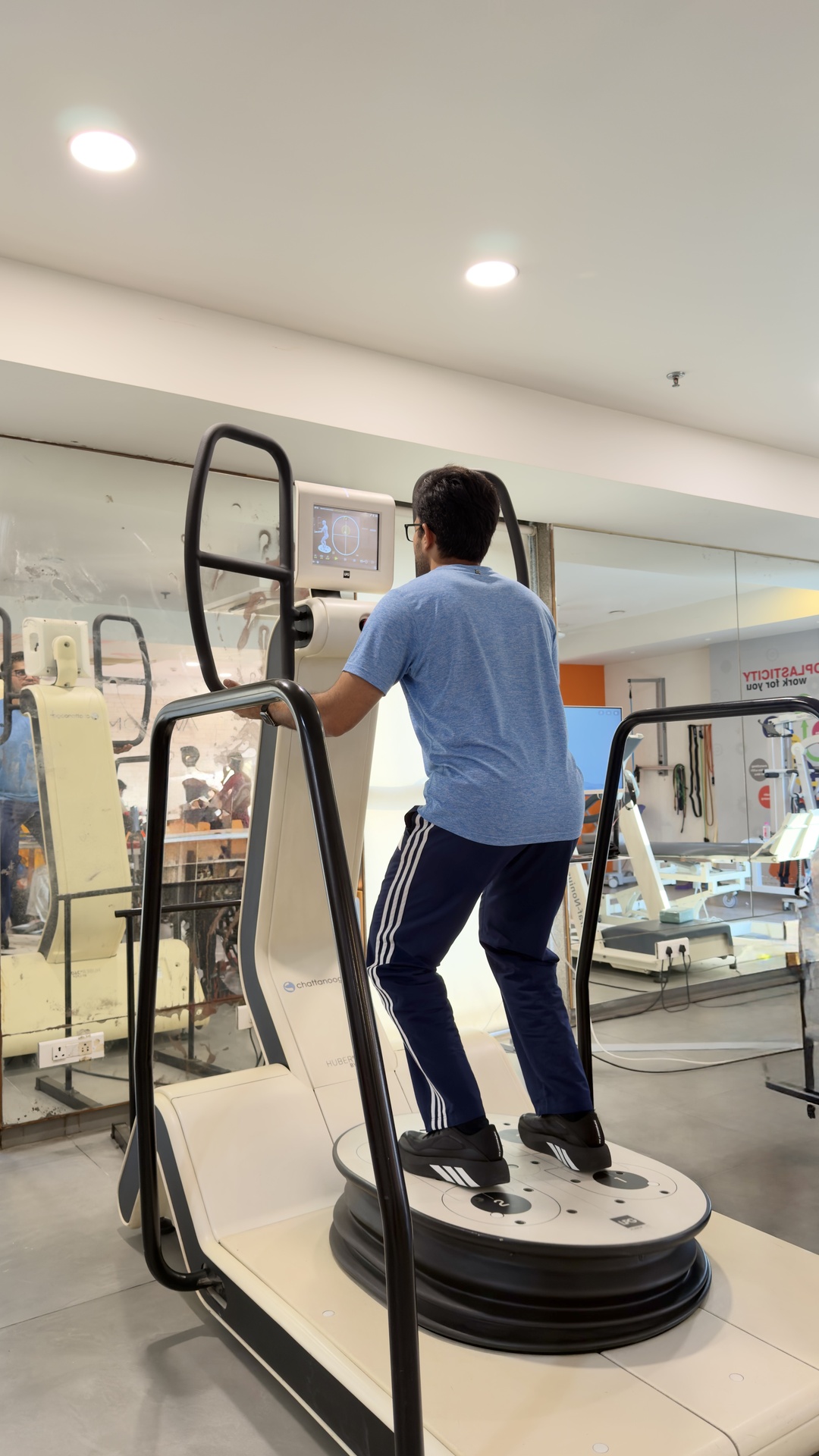
What Your Walking Pattern Says About Your Health - The Hidden Health Test You Perform Every Day
 By Dr. Janardan Mishra
 21 Jun, 2026
  By Dr. Janardan Mishra
21 Jun, 2026
By Dr. Janardan Mishra
21 Jun, 2026
Walking is one of the most complex activities the human body
performs. Every step requires precise coordination between your brain, nerves,
muscles, joints, vision, balance system, and cardiovascular system.
What's fascinating is that most people never think about how
they walk. Every step you take is providing clues about your overall health.
Long before symptoms become severe, the body often starts
sending subtle warning signals.
Sometimes it's pain, fatigue or a change in the way you walk.
Healthcare professionals observe gait because it can provide
valuable insights into:
● Muscle weakness
● Joint problems
● Balance disorders
● Nerve dysfunction
● Neurological conditions
● Cardiovascular health
● Injury risk
● Overall mobility and ageing-related
decline
In many cases, these changes appear months—or even
years—before a diagnosis is made.
An unexplained decline in walking speed may indicate:
● Reduced muscle strength
● Balance impairments
● Cardiovascular deconditioning
● Cognitive decline
● Early neurological changes
Research has shown that changes in walking speed may
sometimes appear years before conditions such as dementia or Alzheimer's
disease are diagnosed.
Have your steps become smaller than they used to be?
Short, hesitant, or dragging steps may indicate:
● Hip stiffness
● Joint pain
● Muscle weakness
● Fear of falling
● Reduced balance confidence
A shuffling gait, often called "festination," is
commonly associated with neurological conditions such as Parkinson's disease,
multiple sclerosis, and other movement disorders.
In a normal walking pattern, the arms swing naturally and
symmetrically alongside the legs.
When one or both arms stop swinging normally, it may
indicate:
● Lower back tension
● Movement restrictions
● Early neurological
dysfunction
● Parkinson's disease
Sometimes this change develops so gradually that family
members notice it before the individual does.
If you find yourself walking with your feet placed unusually
far apart, your body may be trying to compensate for instability.
This wider walking pattern may suggest:
● Balance disorders
● Inner ear (vestibular)
dysfunction
● Peripheral neuropathy
● Increased fall risk
Do you unconsciously put more weight on one side?
Common causes include:
● Knee arthritis
● Hip arthritis
● Previous injuries
● Muscle weakness
● Chronic pain
Over time, these compensations can place excessive stress on
other joints and tissues, leading to additional problems.
A "foot slap" occurs when the front of the foot
cannot stay lifted during walking and strikes the ground loudly.
This may indicate:
● Nerve-related weakness
● Foot drop
● Peripheral nerve damage
● Neurological disorders
Foot dragging should never be ignored, as it significantly
increases the risk of falls.
Many people dismiss occasional stumbling as simple
clumsiness.
But repeated tripping may signal:
● Balance deficits
● Muscle weakness
● Reduced coordination
● Sensory nerve dysfunction
● Early neurological changes
Often, the body is signaling a problem long before a major
fall occurs.
Do your calves, thighs, or buttocks begin hurting while
walking, only to improve when you stop and rest?
This could be a warning sign of peripheral artery disease
(PAD), a condition where narrowed arteries reduce blood flow to the legs.
Symptoms may include:
● Calf cramps
● Leg fatigue
● Walking intolerance
● Pain that improves with rest
Early assessment is important because PAD may also indicate
underlying cardiovascular disease.
It's important to remember that not all gait changes are
caused by severe neurological or medical conditions.
Temporary or reversible factors can also affect the way you
walk, including:
● Vitamin B12 deficiency
● Inner ear infections
● Poor footwear
● Muscle imbalances
● Tight hamstrings
● Weak glute muscles
● Fatigue
● Recent injuries
The key is noticing changes that persist, worsen, or appear
without an obvious explanation.
One of the biggest mistakes people make is assuming that
changes in walking are simply a normal part of aging.
While aging can influence mobility, significant changes in
gait should never be ignored.
Early identification allows healthcare professionals to address:
● Weakness
● Joint dysfunction
● Balance problems
● Neurological disorders
● Fall risk
● Cardiovascular issues
before they become major limitations.
In many cases, early intervention can dramatically improve
outcomes and quality of life.
Your walking pattern is much more than a way of getting from
one place to another.
It reflects how well your brain, nerves, muscles, joints,
balance systems, and cardiovascular system are working together.
The next time you notice yourself walking differently—taking
shorter steps, slowing down, stumbling more often, or feeling less stable—don't
ignore it.
Your body may be trying to tell you something.


 Dr. Richa Ojha
 Dr. Disha Shah
 Dr. Aalap Shah
 Dr. Bansari Patel